Robert Nasveld Composer’s Portrait
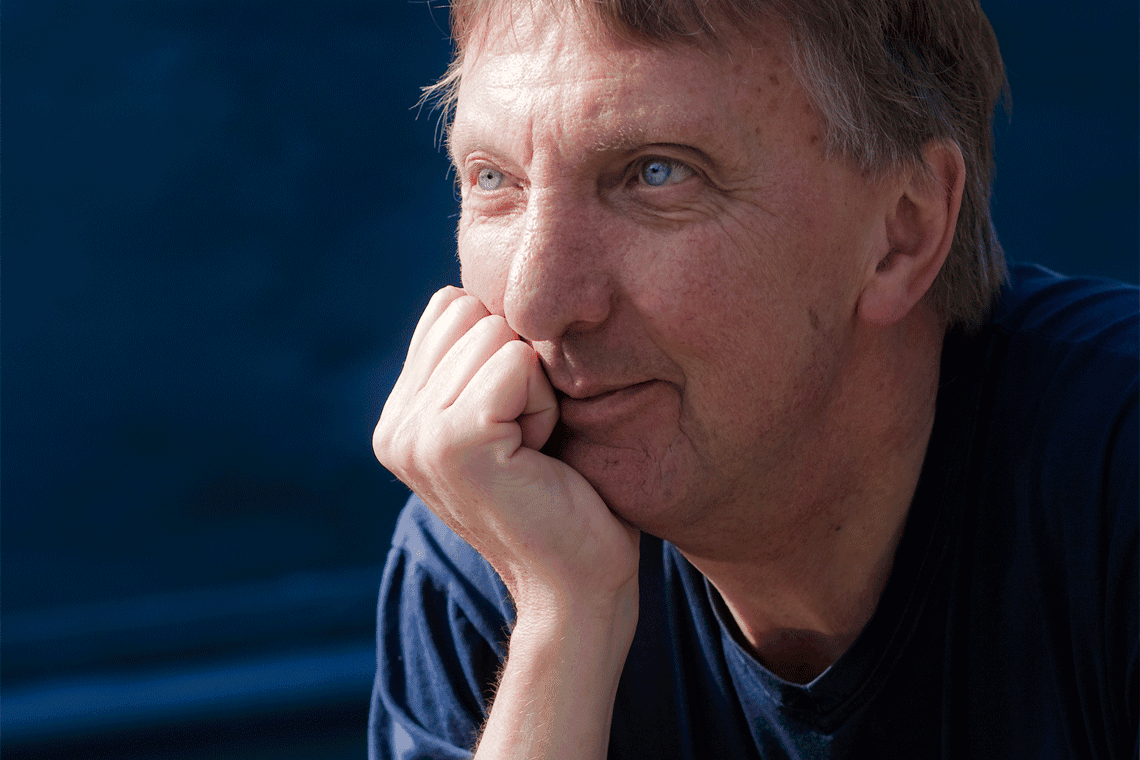
As a pianist, Robert Nasveld is best known as a performer of the work of Georg Crumb. Nasveld also wrote an oeuvre for various formations; he selected a number of works from his for tonight. The reason for Robert Nasveld’s composer portrait in the Orgelpark is the rarely performed composition Organ Talk.
Robert Nasveld:
“Nothing is too crazy in opera. You see singers singing under the most bizarre circumstances, even standing on their heads. Strangely enough, song recitals lack any form of theater and you get what you expect. My Imaginations I & II (1978 and 1985 respectively) for piano and baritone, composed more than 40 years ago, embrace theater and do something to break through expectations. There are derailments. It was not a goal in itself but a spontaneous part of the composition process. I used a self-constructed sound text. That offered advantages because I was not tied to musical illustrations and was free to suggest images. I was very interested in absurdism. Lieuwe Visser and I performed the pieces regularly at the time. The traditional approach to the song programming, the lack of musicians who dare to take on the adventure and the high level of difficulty for singer and pianist meant that I had no illusions of ever experiencing a performance by others again. Tobias Greenhalgh and pianist Chris Buckman unexpectedly stand up for these compositions that belong to my earlier period.
I once played just an hour from a thick collection of short pieces by Robert Schumann. Strange but true: the character piece hardly or does not appear in the new music. This observation led me to the idea of composing a series of short pieces with the collective title Traumblätter (2007). In a dream anything can happen. This realization gave me a wonderful feeling of compositional freedom while writing.
My music often places high demands on the rehearsal process. Head nods and secret signals from the musicians are often necessary to master the music and reach the finish line together. The musicians in my piano trio Hanging around (2003) cannot escape it either. They have to catch each other flies and play tag. A motif of three intervals is always viewed kaleidoscopically from all sides.
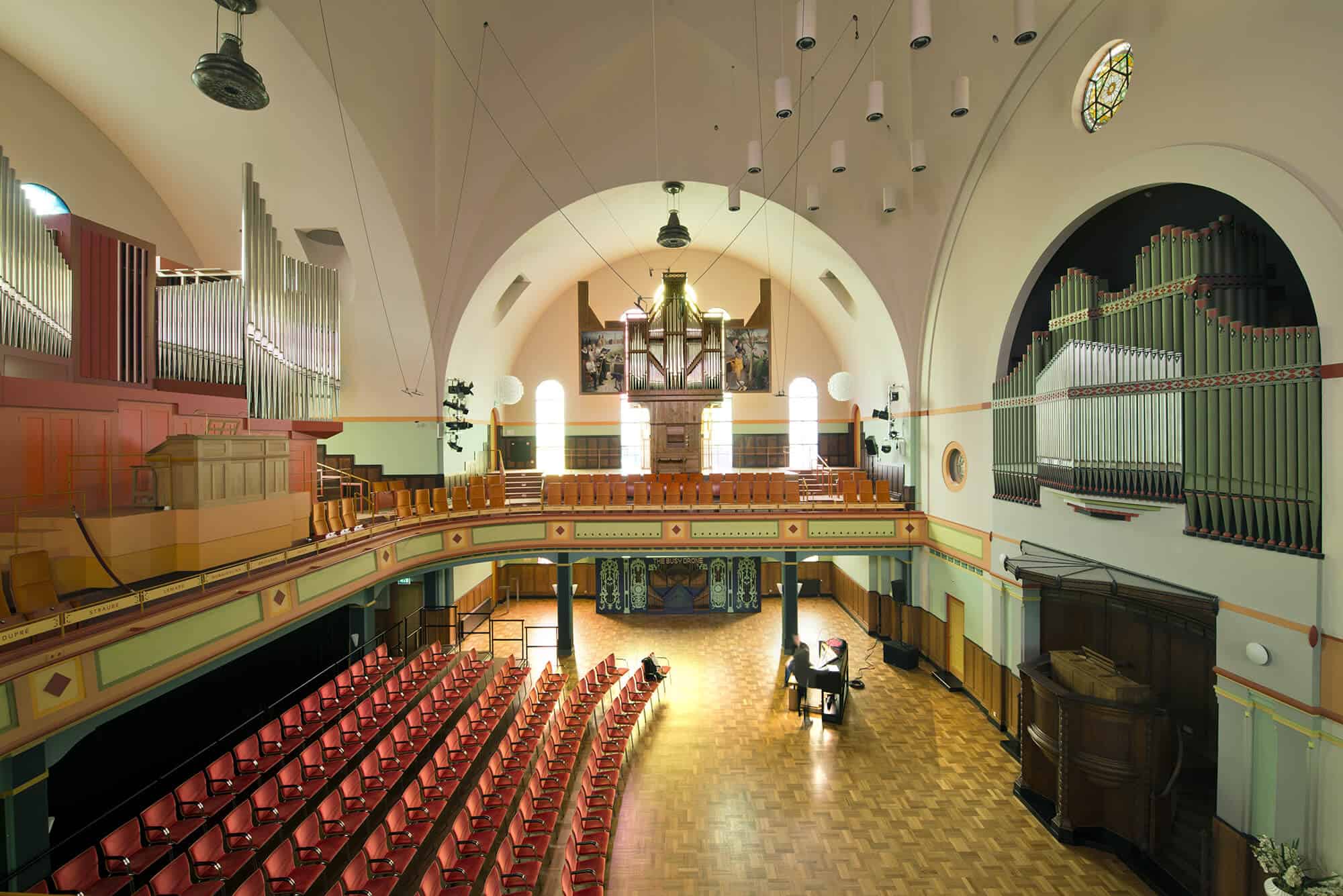
In the four pieces that form Organ Talk (2011), I looked for unorthodox registrations, unusual combinations of heavenly whistles and, for example, screeching, moody bassoons. The material for ‘disputations’ may seem simple, but due to its polyphonic arrangement it is often complex, which means that appearances can be deceiving: the organist has his hands full. I like to elevate musical tropes to starting points, such as the tremolo in Pipe Talk (rarely heard on the organ) or the grace note and Schleifer in Shop Talk. In Pep Talk I was inspired by Central African motifs.
I have started a piano cycle entitled Book of Minds. Jubilant Mind was added in January, added to this evening at the last minute.”
Program:
- Traumblätter (Dream Leaves) (2007) for piano 4-hands / (Corien van den Berg & Niek de Vente)
- Hanging around (2003) for piano trio / Mosa Trio: Alexandra van Beveren violin, Paul Stavridis cello, Bram de Vree, piano
- Imaginations I (1978) for bariton and piano / Tobias Greenhalgh, bariton; Chris Bruckman, piano
- Jubilant Mind (2024) world premiere / Marian Bolt, piano
- Organ Talk (2011) / Leo van Doeselaar, orgel(s)
- Imaginations II (1985) melodrama for bariton and piano (and doll) / Tobias Greenhalgh, bariton; Chris Bruckman, piano
- Composer(s) Robert Nasveld
-
Title(s) of the Work(s)
- Traumblätter (Dream Leaves)
- Hanging around
- Imaginations I
- Jubilant Mind
Organ Talk - Imaginations II
- Performer, Ensemble or Orchestra Niek Vente and Corien van den Berg, piano, Tobias Greenhalgh, baritone, Chris Bruckman, piano, Leo van Doeselaar, organ. Mosa Trio
- May 31 2024
- Expired!
- 20:15 - 22:30