Willem Jeths: Scale ‘Le tombeau de Mahler’
The paralysing awareness that death is close at hand and his love for Mahler. Willem Jeths incorporated it into his 14-minute orchestral work ‘Scale – Le tombeau de Mahler’. He wrote it in 2011 for the Concertgebouw Orchestra. The Netherlands Philharmonic Orchestra will play it again, conducted by Hartmut Haenchen.
The November Music festival publishes monographs on Dutch composers every year. In 2016, Joep Christenhusz devoted a monograph to Willem Jeths, who was still Composer of the Netherlands that year. Scale – le tombeau de Mahler is discussed in detail:
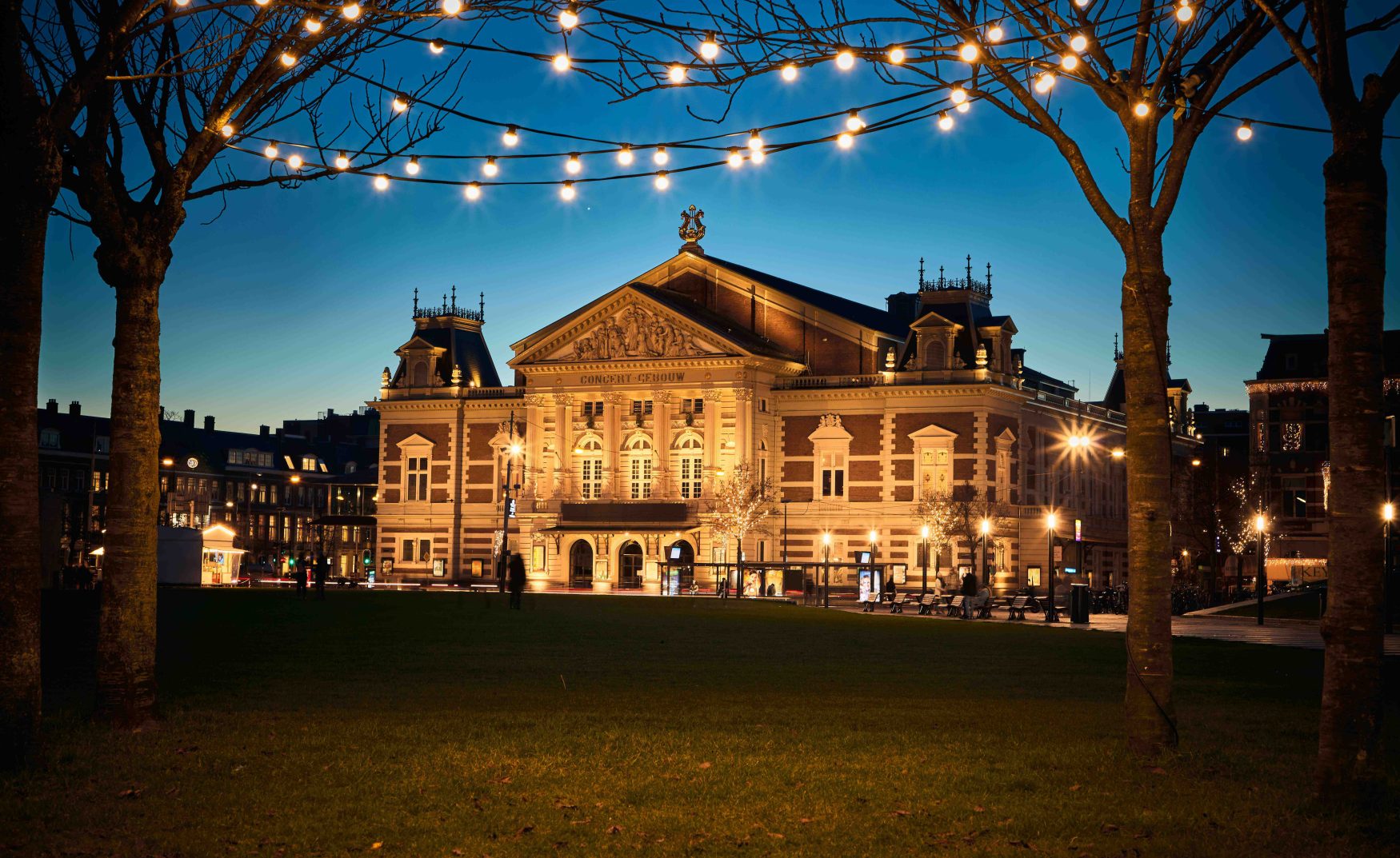
“Scale – le tombeau de Mahler was a commissioned work for the Royal Concertgebouw Orchestra. The company asked Jeths to write a short symphonic piece for the Mahler years 2010-11, incorporating an anecdote from Mahler’s life. He resolutely rejected the initial suggestion to do ‘something’ with the meeting between Mahler and Sigmund Freud. I thought that the image of Mahler walking around Leiden and talking about his marital problems was not dramatic and interesting enough to be used as an underlying idea.
In Oliver Hilmes’ Alma biography, however, Jeths read about another drastic event in Mahler’s life: in February 1908 the couple were in New York when, in their room in the Hotel Majestic, they heard noise in the street. From the window they saw a funeral procession approaching from Central Park. A large crowd of people is escorting the fireman Charles W. Kruger, who died in harness, to his final resting place. The crowd stops just in front of the hotel. The chief of police gives a speech that ends with a dull drumbeat, and the procession sets off again. The scene so moved Mahler that he was to refer to it in his Tenth. In the opening of the finale, a subdued bass drum and a gritty tuba motif evoke the memory of the February day in question. At the same time, a lugubrious premonition of Mahler’s own death can be heard in the passage.
These measures are metaphorical for the last years of Mahler’s life’, says Jeths. He lived constantly in the shadow of death. His little daughter Putzi had died in 1907, he knew that he himself was suffering from a serious heart condition and I am convinced that he felt his own end approaching.
The score of Scale – le tombeau de Mahler (renamed ‘Wie ein Kondukt’ in the First Symphony) is therefore full of archetypal references to life and death. Rising lines in the strings and wood are a resounding symbol for the steps that every human being has to climb in life, after which the by now familiar tutti chord expresses the panic about the inevitability of dying. Barely three measures later, tuba and drum lead to a ‘marcia funebre’. The solemn rhythm of the snare drum is vaguely reminiscent of the trumpet signals from Mahler’s Fifth Symphony, the brass section set up in the foyer of the Fernorches ter from Mahler’s Second. [see page 30/31/32]
Jeths: ‘It is an ambiguous passage. On the one hand it is of course a funeral procession, hence the tonal harmonies. It should really sound like a marching band. But the incorporeal sound of the Fernorchester also refers to the Jenseits: the utter mystery that lies beyond death’. All the more dramatic is the moment when a single trumpet detaches itself from the ensemble to fire off a broadly curving solo on the threshold of the concert hall. In the Concertgebouw’s Great Hall, this worked beautifully, as if a voice from the hereafter were speaking to the living’. “
- Composer(s) Willem Jeths
-
Title(s) of the Work(s)
Scale te toebeau de Mahler
- Performer, Ensemble or Orchestra Nederlands Filharmonisch Orkest, conductor - Harmut Haenchen
- May 29 2022
- Expired!
- 14:15 - 16:15